Drew Schmid · 13 October 2026
How Community Bike Hubs Are Reshaping Local Supply Chains for Independent Repair Shops
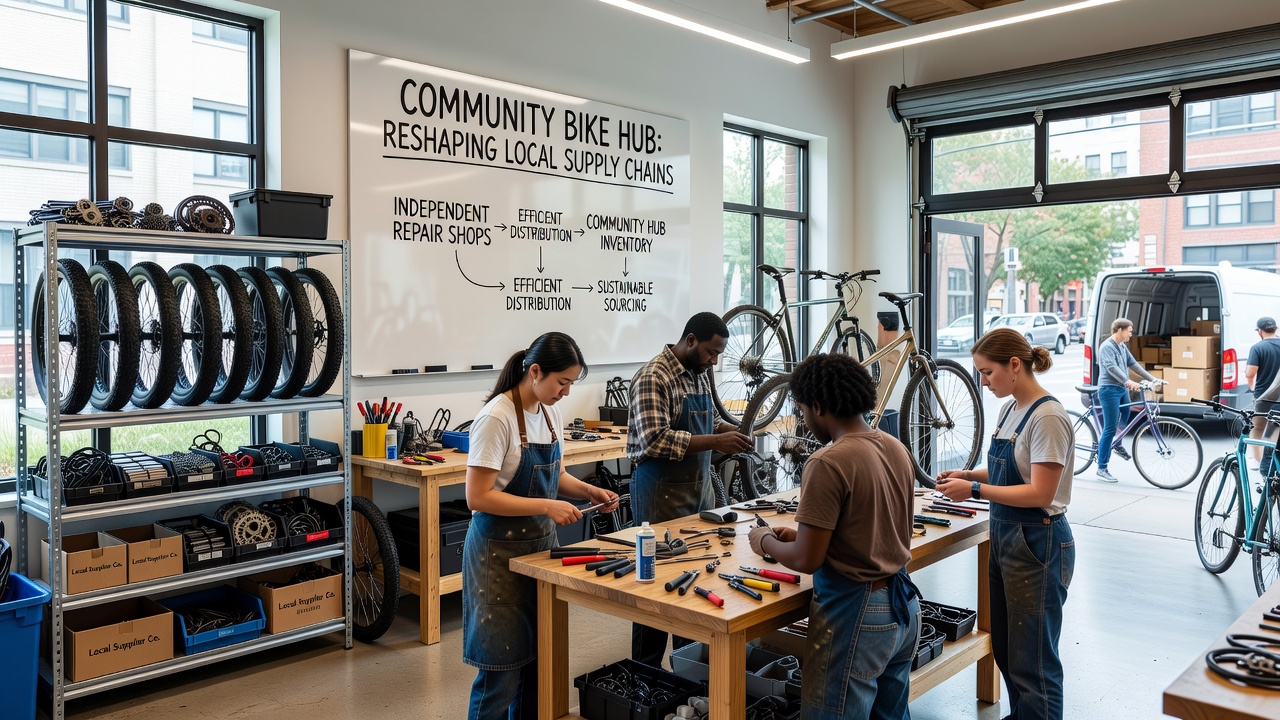
Community bike hubs have emerged as centralized points where volunteers, mechanics, and residents collect, refurbish, and redistribute bicycle components, and this model directly alters how independent repair shops source parts and manage inventory. Researchers tracking urban cycling programs note that hubs often operate on shared databases that list available stock across multiple locations, which allows small shops to order items on demand rather than maintaining large warehouses of seldom-used components. Data from municipal transportation departments in several North American cities indicate that shops affiliated with hubs reduced their average part lead times by 18 days during the 2025 fiscal year.
Shifting From Centralized Distributors to Localized Networks
Traditional supply chains for bicycle parts typically route through national distributors that consolidate orders from overseas manufacturers, yet community hubs bypass several of those layers by accepting donations, salvaging frames from municipal recycling programs, and fabricating simple adapters in on-site workshops. Observers at the European Cyclists' Federation have documented cases where hubs in mid-sized cities now supply 30 percent of the brake pads and chain links used by nearby independent shops, a shift that began accelerating after 2023 policy changes favoring circular economy grants. In October 2026, figures released by Transport Canada revealed that 47 shops across three provinces reported sourcing at least one-quarter of their consumable stock through hub partnerships instead of direct importer contracts.
Mechanics working in these independent shops describe the change as a move toward just-in-time replenishment, while the hubs themselves function as both warehouses and training centers that teach apprentices how to identify compatible components across different manufacturers. This arrangement reduces the capital tied up in slow-moving inventory and frees shelf space for higher-margin services such as custom wheel builds.
Inventory Sharing Platforms and Real-Time Data Exchange
Digital platforms developed by regional cycling coalitions now connect hub inventories with shop point-of-sale systems, allowing a mechanic in one neighborhood to see whether a specific derailleur hanger exists at a hub two districts away before placing an order with a distant wholesaler. Studies conducted by the University of British Columbia's Sustainable Transportation Lab show that shops using these platforms cut emergency overnight shipping costs by an average of 62 percent over a twelve-month period. The same research indicates that hubs in turn benefit from aggregated demand data that helps them prioritize which donated bikes to strip first for usable parts.
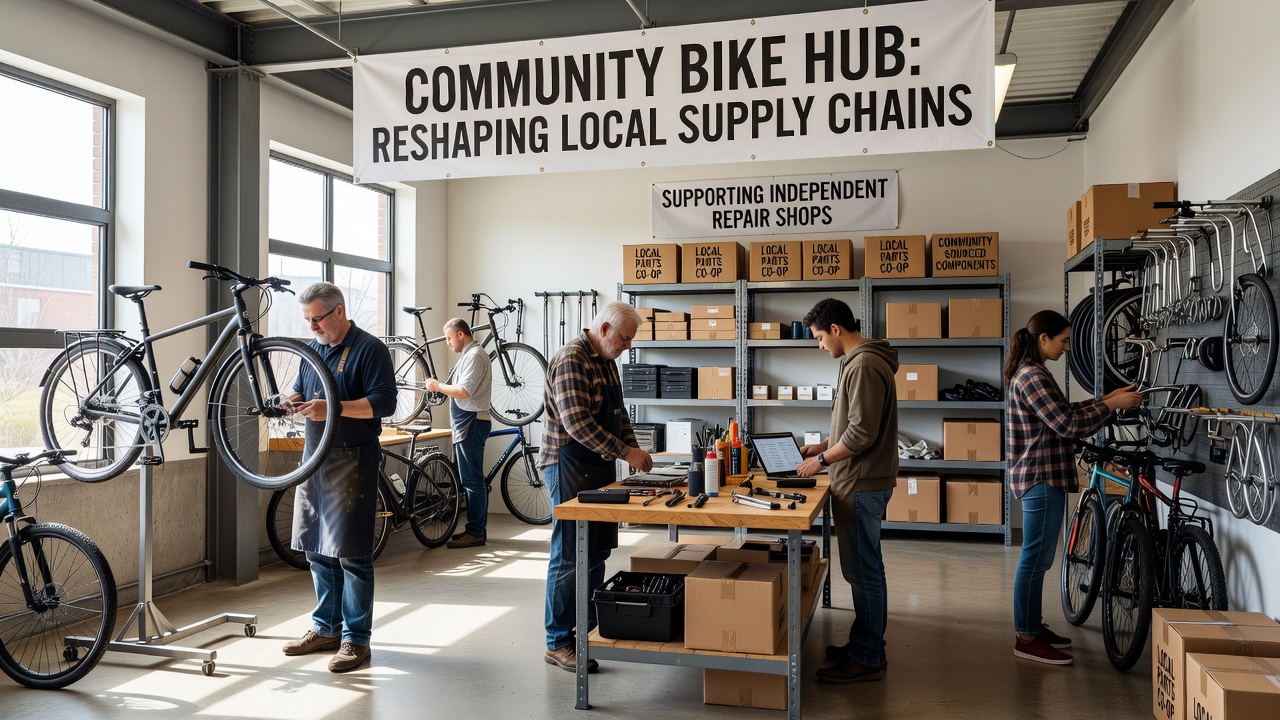
Those platforms also log part condition grades, which helps shops decide whether to accept a refurbished component or wait for new stock. Because the data remains open within the participating network, duplicate purchases decline and surplus items move more quickly to locations where demand exists. Australian cycling industry reports from 2025 noted similar patterns among shops that joined hub networks in Melbourne and Brisbane, where average stock turnover rates rose from 4.2 to 6.8 cycles per year.
Training Programs and Skill Transfer That Support Supply Reliability
Beyond physical parts, hubs run certification courses that teach shop owners and employees standardized inspection protocols, which in turn improves the quality of components that flow back into the shared system. Participants learn to grade bearings, true wheels to specific tolerances, and identify frame damage that would otherwise lead to unnecessary discards. Organizations such as the Canadian Cycling Association have tracked how these programs increase the proportion of donated bicycles that yield usable parts from 41 percent to 67 percent within the first year of hub operation.
Independent shops that send staff to hub workshops report fewer returns due to misdiagnosed faults, because technicians now apply consistent diagnostic checklists. This standardization reduces waste across the entire local chain and allows smaller operations to compete with larger chains that previously held advantages in technical training resources.
Challenges in Scaling and Quality Assurance
Despite measurable efficiencies, the model faces limits around liability for refurbished parts and inconsistent supply volumes during seasonal donation lulls. Municipal audits in several cities have highlighted the need for clearer certification standards before shops can confidently install hub-sourced components on customer bikes covered by service warranties. Some hubs have responded by implementing batch-testing procedures and third-party inspections, yet these steps add administrative overhead that not every volunteer-run operation can sustain.
Geographic coverage also remains uneven, with rural independent shops still largely dependent on traditional distributors because nearby hubs have not yet reached critical mass. Expansion efforts funded through 2026 infrastructure grants aim to address this gap by establishing satellite collection points that feed into established urban hubs.
Conclusion
Community bike hubs continue to integrate donation streams, digital inventory tools, and training programs into the daily operations of independent repair shops, and the resulting supply chains reflect tighter geographic loops and reduced reliance on distant importers. Data collected through 2026 shows measurable drops in lead times and shipping expenses for participating shops, while hubs gain more predictable demand signals that help stabilize their own refurbishment workflows. As more municipalities formalize these partnerships, the pattern suggests further consolidation of local sourcing practices across additional regions.